Welcome to Dystonia Medical Research Foundation of Canada




Support Groups
Join a group in your area to connect with others living with dystonia
Find a Doctor
Find a List of Dystonia Treaters Near You
Mental Health Supports
Are You Feeling Hopeless? Having Thoughts of Suicide? Help is available and you are not alone.
Upcoming Events
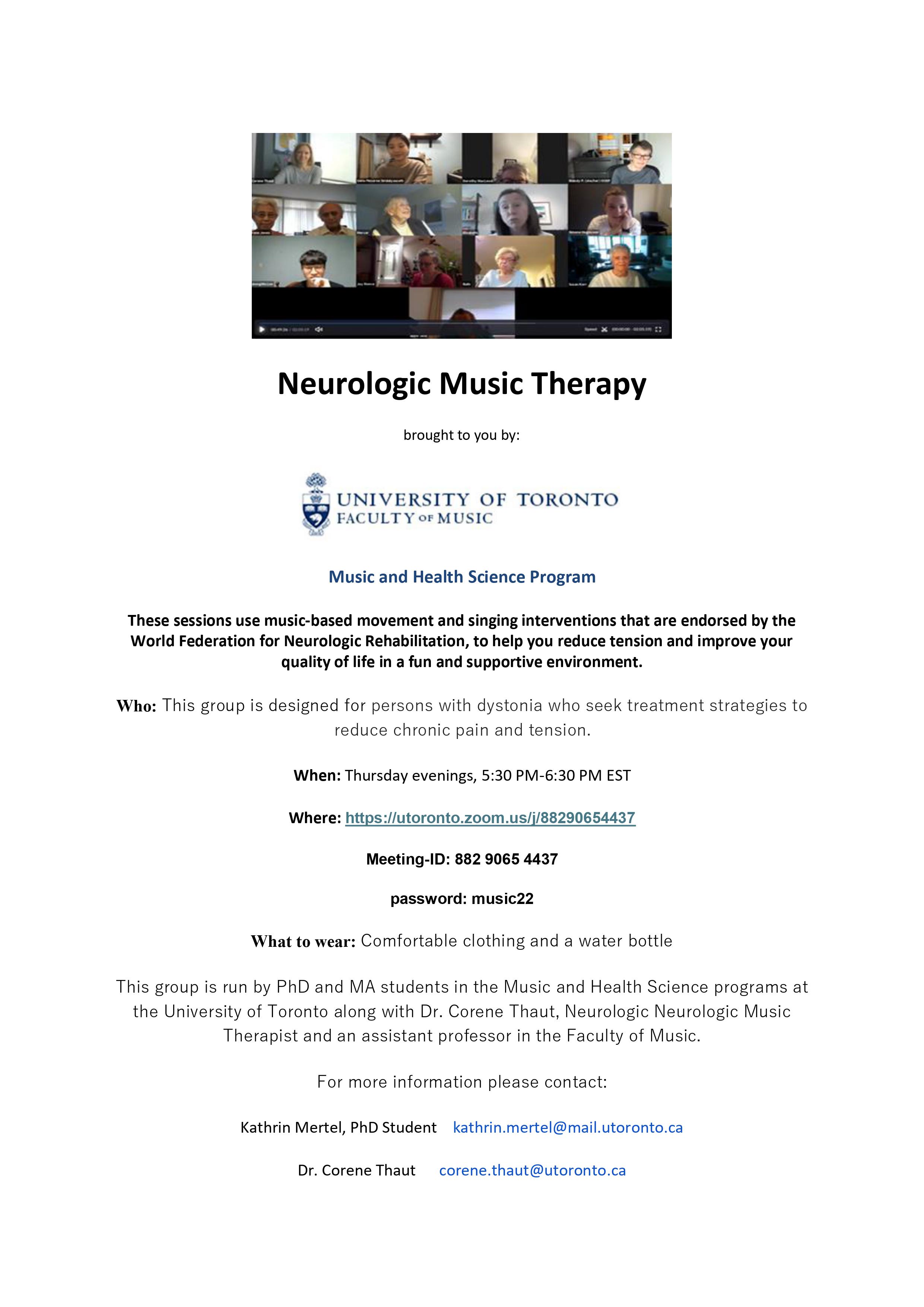
On May 16 at 2 pm Eastern Time, DMRF Canada will facilitate a live presentation with Dr. Grippe to explain the process and answer questions for those interested in participating in the research study below. This session is intended to provide potential participants the…
Read moreDystonia Canada News
TORONTO, ON, October 31, 2023 — To address the dystonia community’s needs in a post-pandemic world, the Dystonia Medical Research Foundation (DMRF) Canada has developed the innovative Community Support and Education Program. The program’s launch renews dystonia patients’ opportunities to learn, connect, and unite with each other.
Utilizing DMRF Canada’s robust network of support groups across the country, the program connects members of the dystonia community through three impactful initiatives:
Read more...